

Table of Contents
- Garment Steamer vs Iron: Which Actually Saves You Time?
- How to Use a Garment Steamer Effectively on Delicate Fabrics
- Handheld vs Upright Garment Steamer: Which Suits Your Home?
- Running Costs: What a Garment Steamer Costs to Own
- Durability, Descaling and Long-Term Garment Care
- Who Should Skip a Garment Steamer
- Frequently Asked Questions
Last Updated: September 14, 2026
Garment Steamer vs Iron: Which Actually Saves You Time?
If you are weighing up whether a garment steamer is worth it, the honest answer is that it depends on your wardrobe, your routine and how much you resent the ironing board. This guide from Indira Enterprises Ltd breaks down the real trade-offs: heat-up time, crease release, fabric safety and running costs, so you can decide in minutes rather than after another wasted purchase.
A garment steamer is a device that releases hot steam through a nozzle to relax fabric fibres and release creases without direct contact from a hot soleplate. That contact-free action is why it handles delicate fabrics, hanging garments and awkward items that never sit flat on an ironing board.
Energy Saving Trust guidance on appliance running costs notes that small appliances vary widely in energy use, which matters once you steam daily.
Heat-Up Time and Crease Release Compared
Heat-up time is where steamers win outright. The 1200W model in the Indira Enterprises Ltd range heats in about 20 seconds and delivers steady steam, while a traditional iron typically needs one to three minutes to reach temperature and then has to cool before you can safely pack it away.

Crease release is a closer contest. Steam relaxes fibres so wrinkles fall out; an iron presses fibres flat with heat and weight. For sharp trouser creases and crisp shirt collars, an iron still wins.
What an Iron Still Does Better
Pressing is the iron's home turf. Structured garments, heavy cotton, linen shirts and anything needing a defined crease come out better under a soleplate. If your working week is built around tailored shirts, keep the iron.
For everything else, steaming is usually faster. You hang the garment, run the steam nozzle down it, and move on.
How to Use a Garment Steamer Effectively on Delicate Fabrics
Mastering a steamer is mostly about distance and motion. Hold the steam nozzle a few centimetres from the fabric, keep it moving, and let the steam do the work rather than pressing the head against the cloth.
A common mistake is steaming a garment while it lies flat. Steam needs the fabric to hang so gravity can help pull the fibres straight as they relax.
Fabric-by-Fabric Settings and Steam Output
Match steam output to the fabric, not to your patience.
| Fabric | Steam Setting | Technique | Watch Out For |
|---|---|---|---|
| Cotton | High, continuous steam | Steam while hanging, tug hem gently | Heavy creases may need a second pass |
| Linen | High | Steam from the inside where possible | Can stiffen if over-steamed |
| Silk | Low | Keep nozzle moving, never rest it | Water spots on dry silk |
| Wool | Medium | Steam vertically, brush afterwards | Over-steaming can flatten the nap |
| Synthetics | Low | Quick passes only | Heat sensitivity varies by blend |
Delicate fabrics reward a light touch. Test on an inside seam first, especially on anything vintage or unlined.
Steaming for Hygiene and Odour Removal
Steam does more than smooth cloth. The heat and moisture help freshen garments between washes, which extends garment longevity and reduces trips to the dry cleaner.
This is the angle most buying guides skip. If you wear a blazer twice a week and it only needs refreshing, a two-minute steam beats a dry-cleaning bill and the wait that comes with it.
Handheld vs Upright Garment Steamer: Which Suits Your Home?
Choose handheld if you steam one or two items at a time and storage space is tight. Choose upright if you steam several garments in a session, want a larger water reservoir and prefer steaming with the unit standing on the floor.
Handheld units are lighter, easier to store and travel-friendly. Upright units offer longer continuous steam runs and less refilling, but they take up wardrobe or cupboard space.
Water Tank Capacity, Cord Length and Weight
Water tank capacity decides how many garments you get per fill. Handheld tanks are small, so expect to refill after a couple of shirts; upright reservoirs last through a full week's worth of steaming.
Cord length and weight matter more than most buyers expect. A short cord forces you to steam next to a socket, and a heavy unit becomes tiring if you hold it above shoulder height for long.
Space-Saving Storage and Travel-Friendly Options
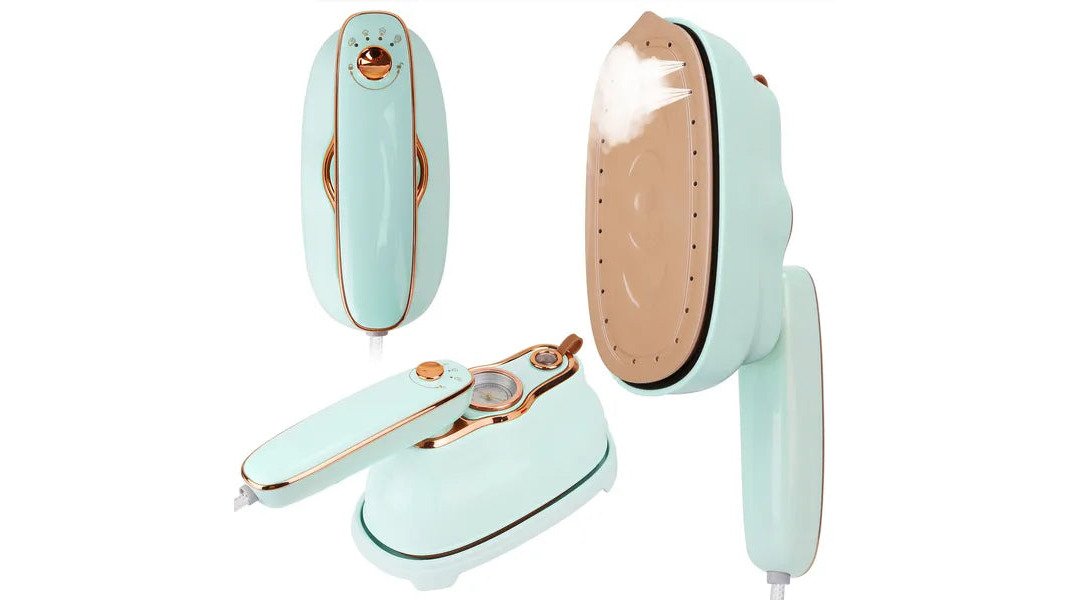
A foldable steamer solves the storage problem outright. The 1200W foldable garment steamer iron from Indira Enterprises Ltd folds down for a drawer or suitcase, which is the practical answer if you live in a flat or travel for work.
Running Costs: What a Garment Steamer Costs to Own
Running costs are lower than most people assume, but the only way to judge whether a steamer is worth it is to put actual numbers against your own usage rather than accept a vague claim that it is 'cheap to run'.
The mechanism is simple. A steamer draws its full rated wattage only while the element is heating and while steam is being released. Between bursts it cycles on and off, so a 1200W unit does not consume 1200W for the entire session. An iron is different: it holds a large thermal mass at temperature for as long as it is switched on, and it keeps drawing power to maintain that heat even while you are repositioning a shirt on the board.
A Worked Example Using Your Own Tariff
You can estimate a session in three steps:
- Find your unit rate on your electricity bill, it is quoted in pence per kilowatt-hour (kWh).
- Multiply the steamer's wattage by the minutes you actually steam, then divide by 60,000 to convert to kWh. A 1200W steamer run for six minutes is 1200 × 6 ÷ 60,000 = 0.12 kWh.
- Multiply that figure by your unit rate.
At a unit rate of, say, 24p per kWh, a six-minute steam costs roughly 3p. An iron left on for twenty minutes at 2000W uses about 0.67 kWh, or roughly 16p at the same rate, before you account for the cool-down time during which it is still drawing power. Over a year of five sessions a week, that difference is the sort of money you notice on an annual bill rather than a weekly one.
Energy Saving Trust guidance on appliance running costs is the sensible reference point for checking how small appliances sit against your wider household consumption, and for confirming your own tariff assumptions.
The Costs That Actually Decide the Verdict
Energy is the smallest line in the calculation. The purchase price dominates, and it is where the 'worth it' question is really settled.
The foldable 1200W steamer iron from Indira Enterprises Ltd is £89.99, which buys both wet and dry modes and a travel-ready design. Set that against the alternative: a replacement iron plus a board, or a standing weekly dry-cleaning bill for the blazers and dresses you wear most. If you currently dry-clean three items a month, the steamer pays for itself in a matter of months purely on refresh cycles, not because it cleans, but because it delays the clean.
Consumables, Water and Descaling
Hard water is the hidden running cost. Scale builds on the heating element, reduces steam pressure and eventually causes spitting. Using filtered or distilled water slows that process, and descaling fluid or white vinegar is a few pounds a year rather than a significant expense. The real cost of ignoring it is a shortened appliance life, which is covered in the next section.
Durability, Descaling and Long-Term Garment Care
Most buying guides stop at 'descale regularly' and never answer the question that actually determines whether a steamer is worth it: how long will it last, what breaks first, and can it be fixed? That longevity angle is where the real value sits, because a steamer that survives five years is a very different proposition from one that dies in eighteen months.
What Fails First, and Why
A common pattern across handheld and upright units is that the heating element and the scale it accumulates are the first points of failure, followed by seals and the pump or valve that feeds water to the nozzle. None of these fail because of age alone, they fail because of water quality and storage habits.
- Scale on the element. Hard water deposits calcium and magnesium on the heating surface. The element works harder, steam output drops, and eventually the unit spits or cuts out.
- Stagnant water. Leaving water in the reservoir between uses encourages scale and odour, and the first steam of the next session carries both onto your clothes.
- Seals and connections. Repeated heating and cooling cycles harden rubber seals over time, which is when leaks appear around the reservoir or nozzle.
A Descaling Routine That Extends Life
Descaling is not a one-off. In a hard water area, a sensible rhythm is every four to eight weeks depending on how often you steam; in a soft water area, every few months is usually enough.
The method is straightforward: mix equal parts white vinegar and water, run it through the reservoir, let it sit to dissolve the deposit, then flush with clean water until the steam runs clear and odour-free. Filtered or distilled water slows the build-up in the first place, which is the cheapest form of maintenance you can do.
Repairability and the Real 'Worth It' Calculation
A practical way to judge value is cost per year of expected service. A £89.99 steamer that lasts five years costs roughly £18 a year. The same steamer that fails after eighteen months costs roughly £60 a year, more than the dry-cleaning it was meant to replace. That is the calculation that decides whether the purchase was worth it, and it depends far more on your maintenance habits than on the brand on the box.
Garment Care as a Long-Term Saving
The quieter benefit is what steaming does to your clothes rather than to your appliance. Contact-free steam relaxes fibres without the direct heat and pressure of a soleplate, so there is less fibre damage over time. Garments that are refreshed rather than repeatedly dry-cleaned tend to hold their colour and structure longer, which spreads the cost of the wardrobe itself across more years of wear.
Who Should Skip a Garment Steamer
Skip a steamer if your wardrobe is built around structured tailoring, if you need knife-sharp creases, or if you genuinely enjoy ironing. An iron presses; a steamer relaxes. They are not the same job.
Also skip it if you expect a steamer to replace dry cleaning. It refreshes and deodorises, but it does not remove stains or clean deep-set soil.
For everyone else, the case is strong. Faster setup, no ironing board, safe on delicate fabrics and gentle on garments you want to keep for years.
The real challenge is finding a steamer that fits your space and your routine rather than sitting unused in a cupboard. Indira Enterprises Ltd stocks a curated range of home gadgets built for exactly that, including the 1200W foldable garment steamer iron with wet and dry modes and a travel-ready design. With secure checkout, UK-based support and worldwide delivery, getting started is straightforward. Explore the range at Indira Enterprises Ltd and take the friction out of your morning routine.
Frequently Asked Questions
Do garment steamers actually work on stubborn creases?
They work well on most everyday creases, especially in fabrics that relax with heat and moisture, such as cotton blends, wool and synthetics. Heavy linen or a sharply pressed trouser crease may still need an iron. A 1200W model releases creases faster than a low-power handheld. For best results, hang the garment, pull it gently taut and pass the steam nozzle slowly down the fabric.
Is it worth buying a garment steamer if I already own an iron?
Many households keep both. An iron gives crisp edges and flat-press finishes, while a garment steamer handles hanging clothes, delicate fabrics and quick touch-ups in under a minute. If you mostly wear shirts, knitwear, dresses or suits and dislike setting up an ironing board, a steamer earns its place. If your wardrobe is mostly cotton shirts that need sharp collars, an iron remains essential. A foldable 2-in-1 model covers both jobs without taking up much space.
What clothes should you not use a steamer on?
Avoid steaming garments labelled dry clean only, waxed or oiled fabrics, and anything with glued-on embellishments, sequins or heat-sensitive prints, which can lift or warp. Leather, suede and some coated textiles can water-spot. Always check the care label first. If you are unsure, test the steam nozzle on an inside hem before working across the whole garment.
Can a garment steamer replace a traditional ironing board?
For most casual and smart-casual clothing, yes. You can steam garments while they hang on a door or rail, so no board is needed. The exceptions are items that need a flat, pressed finish, such as formal shirts, pleated skirts or table linen. If those make up most of your laundry, keep a board for ironing and use the steamer for everything else. A foldable steamer is a practical middle ground for smaller homes.



Leave a comment
This site is protected by hCaptcha and the hCaptcha Privacy Policy and Terms of Service apply.