


Table of Contents
- Quick Comparison: Effective Gadgets for Daily Pain Relief
- How TENS Units Work for Pain Management
- The Best TENS Machine for Back Pain: Dual Channel Starter Kit
- How to Use a TENS Unit for Daily Relief
- Heat and Cold Therapy Gadgets for Muscle Recovery
- Best Smart Fitness Recovery Gadgets 2026: Percussion and Vibration Tools
- Targeted Relief for Neck, Shoulder and Joint Discomfort
- Safety, Contraindications and Maintenance for At-Home Pain Gadgets
- Frequently Asked Questions
Last Updated: September 28, 2026
Quick Comparison: Effective Gadgets for Daily Pain Relief
Persistent pain is a daily reality for millions, and the market has responded with home devices promising relief without a prescription. This guide from Indira Enterprises Ltd separates gadgets that use proven mechanisms from those that simply look impressive on a product page.

| Device | Price | Mechanism | Best For | Standout Spec |
|---|---|---|---|---|
| Dual Channel TENS Machine | £41.86 | Electrical pulses | Back and muscle pain | 20 programmes, 80 intensity levels |
| Far Infrared Heating Pad | £45.84 | Deep heat | Back and joint stiffness | 50x60cm, 6 heat settings |
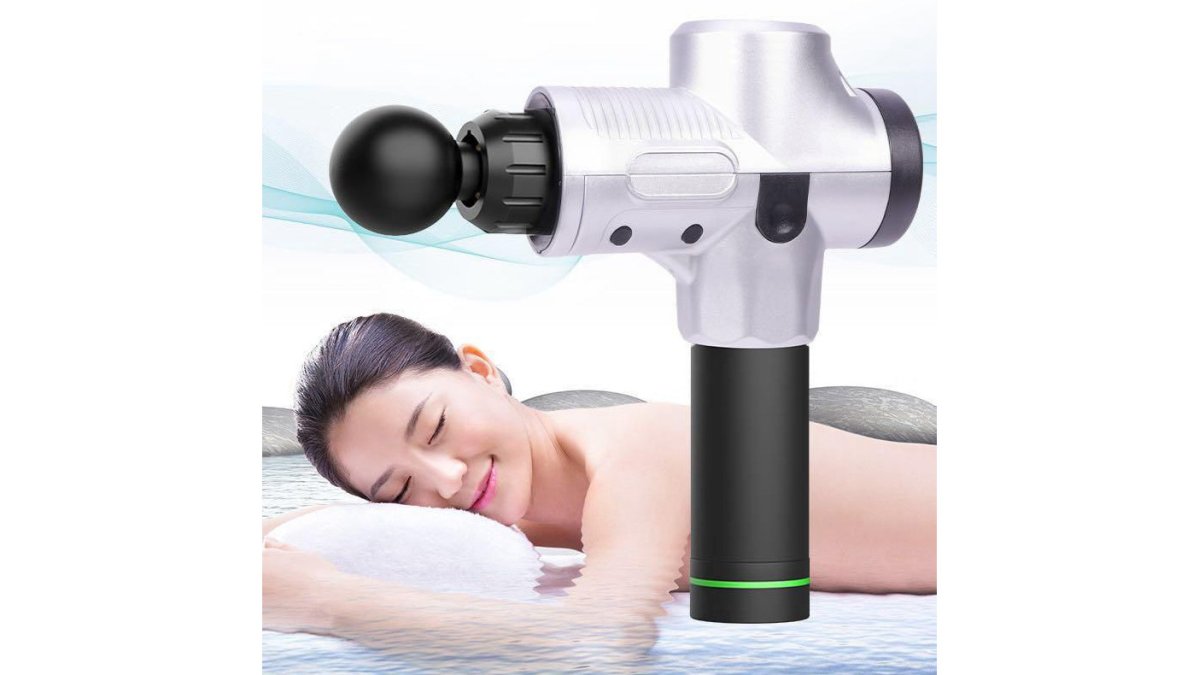
| Pro Massage Gun | £64.02 | Percussion | Post-workout soreness | 6 speeds, 8 heads, 3200 RPM |
| Heated Vibration Knee Massager | £44.00 | Heat plus vibration | Knee discomfort | 3000mAh cordless battery |
| Acupressure Mat and Pillow Set | £40.05 | Pressure points | Tension and stress | 6,210 acupressure points |
| EMS Foot Massager Mat | £24.99 | Electrical muscle stimulation | Tired feet | Foldable, corded or cordless |
| Smart Posture Corrector | £33.48 | Vibration alerts | Desk-related slouching | 30-day battery life |
| Reflexology Acupressure Foot Mat | £22.28 | Pressure points | Foot fatigue | 1,800 acupressure points |
| Eye Massager with Heat | £43.28 | Heat, pressure, vibration | Eye strain and headaches | Bluetooth music player |
| Silicone Cupping Set | £21.79 | Suction | Muscle recovery | 12 cups in 4 sizes |
How TENS Units Work for Pain Management
A TENS unit sends small electrical pulses through adhesive electrodes on the skin, interfering with pain signals travelling to the brain and encouraging the release of endorphins. Transcutaneous electrical nerve stimulation (TENS) is non-invasive, nothing breaks the skin and no medication is involved, making it one of the most accessible at-home options.

The Best TENS Machine for Back Pain: Dual Channel Starter Kit
For back pain specifically, the Dual Channel TENS Machine Pain Relief Unit - Starter Kit from Indira Enterprises Ltd is our top pick, and the dual channel design is why. Back pain rarely sits in one tidy spot, and a dual channel unit lets you treat two areas at once, both sides of the lower back, or the back and a shoulder.
How to Use a TENS Unit for Daily Relief
A consistent routine matters more than any single session. Here is a straightforward process for daily use.
- Clean and dry the skin where you plan to place the pads. Oils and lotion weaken adhesion.
- Attach the electrodes to the painful area, spacing them a few centimetres apart around the source of discomfort.
- Start at the lowest intensity and increase slowly until you feel a firm tingling.
- Set a timer for 20 to 30 minutes. Longer sessions are not automatically better.
- Remove the pads gently and wipe the skin afterwards.
- Log the programme and intensity that worked best so you can repeat it.
Heat and Cold Therapy Gadgets for Muscle Recovery
Heat and cold work on the same problem from opposite directions. Heat increases blood flow, relaxes tight muscle fibres and reduces stiffness that builds overnight or after long sitting. Cold slows local metabolism, reduces swelling and dampens the sharp pain after a strain or flare-up. The practical rule is simple: heat for chronic, cold for acute. Heat on a freshly inflamed joint tends to make it worse, and cold on a chronically stiff back offers little more than temporary numbing.

Heat therapy devices
The Far Infrared Heating Pad for Back 50x60cm - Professional (£45.84) stands out because far infrared heat penetrates several centimetres deeper than a standard electric blanket, reaching muscle and joint tissue rather than just warming the skin. The 50x60cm size covers a full back, and the auto shut-off is a genuine safety feature. The limitation is that infrared pads take longer to reach full warmth, plan for a ten to fifteen minute build-up.
Cold therapy devices
Cold therapy is the half of this category most buying guides skip. A gel pack kept in the freezer and wrapped in a thin cloth is the simplest option and the one most physiotherapists still recommend for acute flare-ups. Cold compression devices that combine intermittent pressure with cooling cost more but are the closest home equivalent to what a clinic uses after injury.
Masking relief versus rehabilitation
This distinction separates a gadget that helps you cope from one that helps you recover. Heat and cold are primarily comfort tools, they reduce the sensation of pain while applied, but do not strengthen tissue, restore range of motion or correct the underlying cause. Used alongside movement, stretching and, where appropriate, professional physiotherapy, they make the harder work more tolerable.
Best Smart Fitness Recovery Gadgets 2026: Percussion and Vibration Tools
Recovery tools have moved well beyond foam rollers, and the two mechanisms worth understanding are percussion and vibration. Percussion delivers rapid, repeated mechanical impulses into muscle tissue, increasing local blood flow, reducing tightness and temporarily raising the tissue's tolerance to stretch. Vibration works on a similar principle at lower amplitude, often paired with heat in joint-focused devices.
Dual Channel TENS Machine Pain Relief →
How to use percussion tools properly
Percussion is not a case of more pressure equals more relief. The technique that works is slower than most expect:
- Start on the lowest speed and glide the head over the muscle belly rather than pressing it into one spot.
- Keep moving, around thirty seconds per area is enough before moving on.
- Work along the muscle, not across a joint or along the spine.
- Stay on muscle bellies only. The spine, the front of the neck, the kneecap and any bony prominence should be avoided entirely.
- Stop if it hurts. A dull, pleasant pressure is the target; sharp pain means the setting or placement is wrong.
Masking relief versus rehabilitation
Percussion and vibration are preparation and recovery tools, not treatments. They make tight tissue feel looser and stretching more comfortable, but do not build strength, improve joint stability or correct the movement patterns that caused the pain. The people who get the most from them use them as a fifteen-minute bookend to a routine that already includes movement and, where needed, professional guidance.
Targeted Relief for Neck, Shoulder and Joint Discomfort
Desk work concentrates tension in predictable places: the neck, the tops of the shoulders, and the upper back. Two gadgets address this directly.
Safety, Contraindications and Maintenance for At-Home Pain Gadgets
Safety is the section most buying guides skip, and it matters most. Electrical devices, heat pads and pressure tools all carry specific contraindications.
- Pregnancy: avoid TENS and EMS devices unless your midwife or GP approves.
- Implanted devices: pacemakers, insulin pumps and similar devices rule out electrical stimulation.
- Circulation problems or neuropathy: check with a clinician before using heat therapy, because reduced sensation raises burn risk.
- Blood thinners: avoid cupping and any therapy that draws blood to the surface without medical advice.
- Open wounds, rashes or broken skin: never place electrodes or cups over damaged areas.
Frequently Asked Questions
What should I look for when buying a home pain relief device?
Focus on four things: the type of therapy (electrical stimulation, heat, percussion or acupressure), adjustable intensity levels, safety features like auto shut-off, and ease of use. For daily pain relief, a device with multiple programmes suits changing needs. Check the warranty and whether replacement parts like electrode pads are easy to buy. A TENS machine with 20 programmes and 80 intensity levels gives more flexibility than a fixed-setting unit.
Are TENS machines effective for chronic pain management?
TENS machines work by blocking pain signals and stimulating endorphin release, which can reduce perceived pain during use. Many people with chronic back pain find them helpful as part of a wider routine that includes movement and physiotherapy. Evidence suggests benefits are strongest during active use rather than long-term cure. A dual channel TENS unit that treats two areas at once is useful if your pain shifts between locations.
How do I safely use electronic pain relief devices at home?
Read the manual before first use and start on the lowest intensity, increasing gradually. Never place electrodes on the head, front of the neck, chest or over broken skin. Avoid using TENS if you have a pacemaker or are pregnant unless a doctor approves. Keep sessions to 20-30 minutes and stop if you feel skin irritation. Clean reusable electrode pads and store devices in a dry place to maintain performance.
Can wearable technology help with joint and back pain?
Wearable devices like smart posture correctors and heated knee massagers can support joint and back comfort in daily life. A posture corrector with vibration alerts reminds you to sit properly, which reduces strain over time. Heated vibration knee massagers combine warmth and gentle massage for on-the-go relief. These tools work best alongside regular movement and professional advice, not as a replacement for treatment.


Leave a comment
This site is protected by hCaptcha and the hCaptcha Privacy Policy and Terms of Service apply.