

Table of Contents
- The Science of Muscle Recovery: What Happens After You Train
- Benefits of Massage Guns for Muscle Recovery
- How to Use Foam Rollers Effectively
- The Importance of Rest Days in Strength Training
-
Recovery Tools for Different Training Modalities
- High-Intensity Interval Training and Strength Training
- Endurance Athletes: Volume, Circulation, and Compression
- Powerlifters and Strength Athletes: Tension, Trigger Points, and Joint Health
- HIIT and CrossFit-Style Training: Systemic Fatigue and Localised Damage
- Matching Tool Mechanisms to Training Demands
- Over-Recovery and Dependency: When More Isn't Better
- Conclusion: Building Your Post-Workout Recovery Protocol
- Frequently Asked Questions
Last Updated: September 27, 2026
The Science of Muscle Recovery: What Happens After You Train
Muscle recovery is the physiological process your body runs after training to repair damaged tissue, clear metabolic waste, and rebuild stronger fibres. Skip it, and you don't just feel sore, you blunt the adaptation you trained for.

The damage happens during the session. Microscopic tears form in muscle fibres, lactate and other by-products accumulate, and your nervous system shifts into a heightened state. What follows is where the real gains sit: blood flow circulation rises, tissue repair begins, and the parasympathetic nervous system takes over to calm everything down.
The Three Phases of Recovery
Recovery is not a single event. It unfolds in overlapping phases, each with different physiological priorities.
Phase 1: Immediate response (0-2 hours post-training). Blood flow to the trained area increases to deliver oxygen and nutrients and remove metabolic by-products like lactate and hydrogen ions. Inflammation begins as the body signals repair cells to the damaged tissue. This is why you feel warm, swollen, or tender immediately after a hard session.
Phase 2: Repair and rebuild (2-72 hours). This is where the real adaptation happens. Satellite cells, specialised muscle stem cells, migrate to damaged fibres and fuse with them to repair and strengthen the tissue. Protein synthesis increases, and the nervous system gradually shifts from sympathetic (fight-or-flight) dominance to parasympathetic (rest-and-digest) dominance. This phase is why sleep and nutrition matter more than any gadget.
Phase 3: Remodelling and adaptation (72 hours to weeks). The repaired tissue is remodelled to better handle future load. Connective tissue strengthens, and the muscle becomes more resistant to damage.
Why Blood Flow Is the Common Thread
Every recovery tool, from massage guns to foam rollers to compression gear, works by influencing blood flow circulation. More blood means more oxygen, more nutrients, and faster removal of metabolic waste. It also means faster delivery of repair cells to damaged tissue.

The Nervous System Side of Recovery
Recovery is not just about muscle tissue. The nervous system also needs to recover, especially after high-intensity or heavy training. Sympathetic dominance, the heightened, alert state you enter during training, needs to shift back to parasympathetic dominance for repair processes to run efficiently.
What This Means for Tool Use
Understanding the phases changes how you use recovery tools. In the immediate phase, gentle movement and light percussion can support circulation without adding stress. In the repair phase, tools help manage stiffness and maintain range of motion so you can train again sooner. In the remodelling phase, tools help maintain tissue quality as you progressively load the muscle.
NHS guidance on exercise and rest
Benefits of Massage Guns for Muscle Recovery
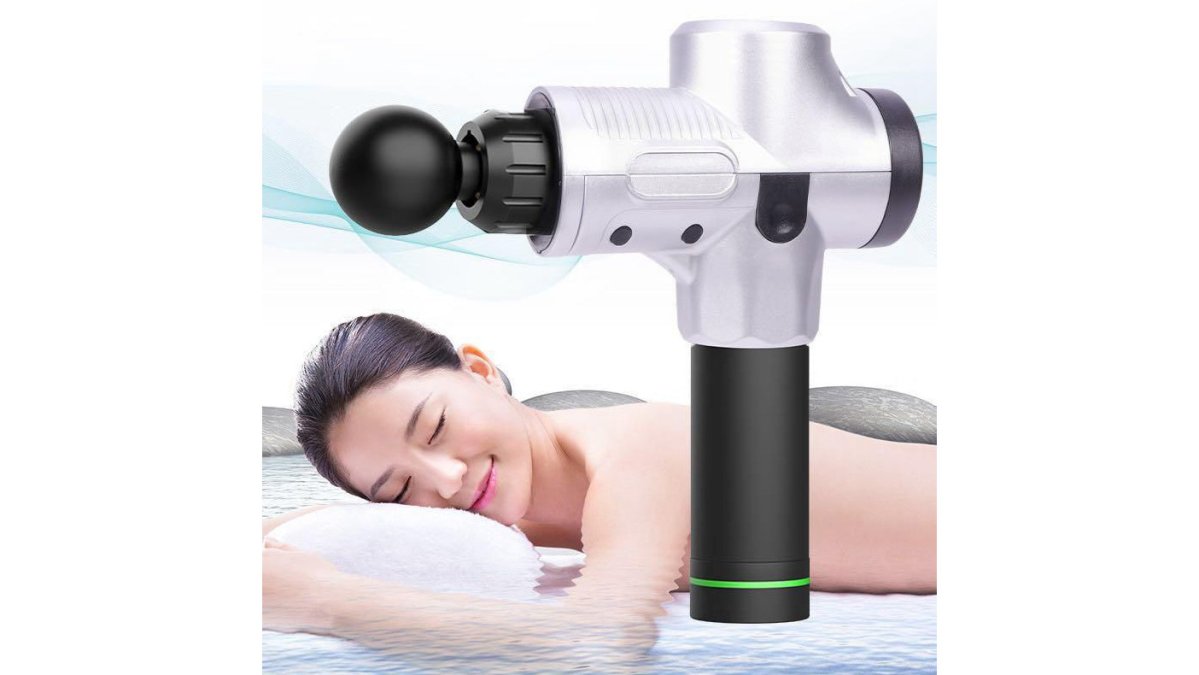
The main benefit of a massage gun is faster relief from muscle stiffness and soreness by driving percussion therapy into deep tissue. It's the most direct way to target a specific knot without booking a therapist.
Percussion Therapy and Blood Flow Circulation
Percussion therapy uses rapid, repetitive pulses to stimulate blood flow circulation in the treated area. More blood means more oxygen and nutrients reaching damaged fibres, which supports tissue repair and helps clear metabolic waste. It also triggers a neurological response that reduces the perception of pain, so tight muscles feel looser within minutes.
Choosing the Right Massage Gun Settings
Start on the lowest speed and work up. For large muscle groups like quads and glutes, a medium speed with a rounded head covers ground quickly. For shoulders and calves, drop to a lower setting with a smaller head.
How to Use Foam Rollers Effectively
Foam rolling works by applying sustained pressure to release trigger points and improve tissue elasticity. Used properly, it improves range of motion and flexibility before you train, and reduces stiffness after.
Step-by-Step Foam Rolling Protocol
- Place the roller under the target muscle group and lie or sit on it
- Roll slowly across the full length of the muscle, 2 to 3 centimetres per second
- Pause on any tender spot and hold for 20 to 30 seconds until the sensation eases
- Roll the opposite direction to cover the full muscle
- Spend 1 to 2 minutes per muscle group, no more
- Follow with light stretching while the tissue is warm
A common mistake is rolling too fast, which does almost nothing. Slow, deliberate pressure is what releases tight fascia.
Pro Massage Gun Deep Tissue Percussion →
The Importance of Rest Days in Strength Training
Rest days are when strength training actually produces results. Training creates the stimulus; recovery builds the muscle. Without rest days, you accumulate muscle fatigue faster than you can repair it.
Active Recovery vs Passive Rest
Passive rest means doing nothing: full downtime with no movement. Active recovery means low-intensity movement, such as walking, swimming, or light cycling, that raises blood flow circulation without adding training load.
| Recovery Type | Best For | Typical Duration | Effect |
|---|---|---|---|
| Passive rest | Post-race, illness, deep fatigue | Full day or more | Full system reset |
| Active recovery | Between training days | 20-40 minutes | Faster lactate clearance |
| Tool-assisted | Targeted tight areas | 5-15 minutes | Localised tension relief |
Recovery Tools for Different Training Modalities
Different training styles create different recovery demands, and the right tool depends on which one you're doing. This is the angle most guides skip.
High-Intensity Interval Training and Strength Training
High-intensity interval training and strength training cause localised muscle damage and heavy central nervous system fatigue. HIIT tends to leave you systemically drained; heavy lifting leaves specific muscle groups tight and sore.
- Massage guns for deep, specific knots in quads, glutes, and shoulders
- Foam rollers for broad areas like the back and IT band
- Massage balls for hard-to-reach trigger points in the feet, hips, and upper back
- Compression gear for reducing swelling and supporting circulation during recovery
Endurance Athletes: Volume, Circulation, and Compression
Endurance training, running, cycling, swimming, creates a different recovery profile. The damage is less about localised mechanical tears and more about cumulative circulatory load, glycogen depletion, and repetitive strain on specific chains (calves, hamstrings, lower back).
Powerlifters and Strength Athletes: Tension, Trigger Points, and Joint Health
Powerlifting and heavy strength work create high mechanical tension in specific muscle groups and place significant stress on joints and connective tissue. Recovery here is about restoring range of motion and releasing trigger points that develop from repeated heavy loading.
HIIT and CrossFit-Style Training: Systemic Fatigue and Localised Damage
HIIT and mixed-modal training create a hybrid recovery problem: systemic nervous system fatigue combined with localised muscle damage across multiple areas. The recovery approach needs to address both.
Matching Tool Mechanisms to Training Demands
| Training Type | Primary Recovery Need | Best Tool Match | Why |
|---|---|---|---|
| Endurance | Circulation, swelling, tissue elasticity | Compression gear, foam roller | Graduated pressure supports venous return; rolling maintains elasticity |
| Powerlifting | Deep trigger points, range of motion | Massage gun, massage ball | Percussion penetrates dense tissue; ball targets specific knots |
| HIIT / Mixed | Systemic fatigue + localised damage | Active recovery, massage gun | Movement clears waste; percussion addresses multiple tight areas |
| General strength | Localised soreness, stiffness | Foam roller, massage gun | Broad and targeted pressure for common problem areas |
Over-Recovery and Dependency: When More Isn't Better
More recovery is not automatically better. Over-recovery, where you spend more time on recovery tools than training, can mask underlying issues and delay physiological adaptation.
Conclusion: Building Your Post-Workout Recovery Protocol
A post-workout protocol is the sequence of actions you take after training to speed recovery and reduce next-day soreness. Build one that fits your training, not one copied from someone else's routine.
Quick add
Frequently Asked Questions
Why is recovery important for fitness?
Recovery allows muscle tissue repair, replenishes energy stores and prevents overtraining syndrome. Without adequate rest, training load exceeds your body's ability to adapt, leading to muscle fatigue, poor performance and higher injury risk. Recovery tools like massage guns and foam rollers support blood flow circulation, which helps clear metabolic waste and deliver nutrients to damaged tissue. Rest days and active recovery sessions are when physiological adaptation actually happens, not during the workout itself.
How do recovery tools help reduce delayed onset muscle soreness (DOMS)?
DOMS peaks 24 to 72 hours after intense exercise. Percussion therapy and foam rolling increase blood flow to sore muscles, which speeds up metabolic waste removal and reduces stiffness. A massage gun with adjustable speed settings lets you target specific areas without aggravating tissue. Compression gear and massage balls work similarly by promoting circulation. These tools won't eliminate DOMS entirely, but they can shorten its duration and make the discomfort more manageable between sessions.
What are the most effective recovery tools for home use?
A percussion massage gun, a high-density foam roller and a set of massage balls cover most recovery needs. A massage gun handles large muscle groups like quads and hamstrings. A 45cm foam roller supports myofascial release across the back and legs. Massage balls in three sizes reach trigger points in shoulders, feet and glutes. Adding a TENS machine or far infrared heating pad helps with persistent tension. Start with one or two tools and build from there based on your training style.
Can recovery tools help prevent common sports injuries?
Recovery tools support injury prevention by maintaining tissue elasticity and joint mobility. Tight, poorly recovered muscles are more susceptible to strains and tears. Regular foam rolling and percussion therapy keep range of motion within healthy limits, reducing compensatory movement patterns that lead to injury. However, tools are not a substitute for proper programming, warm-ups or rest days. Use them as part of a broader post-workout protocol that includes sleep, nutrition and load management.



Leave a comment
This site is protected by hCaptcha and the hCaptcha Privacy Policy and Terms of Service apply.